
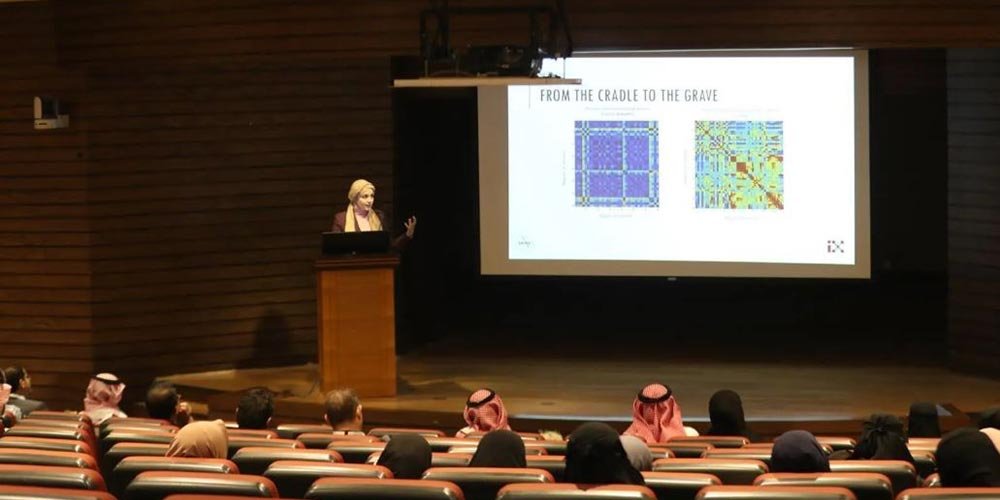
Madinah, November 5, 2026, SPA -- The second day of the Sixth International Multi-Conference on Artificial Intelligence Technology (MCAIT 2026), hosted by Taibah University in partnership with Universiti Kebangsaan Malaysia, featured four keynote lectures, parallel in-person and virtual research sessions, and a specialized workshop addressing the latest developments in artificial intelligence (AI) and its applications in healthcare, the Arabic language, intelligent systems, and advanced technologies.
The keynote lectures addressed the future of AI in understanding the Arabic language, the development of safe and fair AI models through international research collaboration, the historical evolution of AI and the differences between specialized and general AI, as well as the challenges of evaluating language models and measuring their performance in real-world applications, particularly their ability to understand local dialects and social contexts.
The program also featured a specialized workshop on developing natural language processing applications using Transformer models.
The research sessions presented several applied studies in healthcare, including a model for classifying cardiac arrhythmias that achieved 98.32% accuracy; a study developing an intelligent framework for monitoring daily activities and determining the indoor locations of older adults; and research using deep learning techniques to classify lung tissues and detect malaria at an early stage, achieving accuracy rates of 98.38% and 99.12%, respectively, according to research test results.
In Arabic language research, one study analyzed approximately 22,000 classified Arabic texts to identify linguistic indicators associated with depression, achieving 95.85% accuracy. Other studies explored the use of AI to develop assistive technologies for people with visual impairments by combining computer vision and language models to help them understand their surroundings and social interactions.
The research also covered search and rescue applications using drones, smart agriculture and water resource management, and digital network protection and malware detection. Studies presented models and techniques to improve irrigation efficiency and agricultural production, monitor cyber threats, and analyze digital behavior, reflecting the diverse applications of AI in addressing practical challenges and developing technological solutions.