Riyadh, November 19, 2026, SPA -- The Sultanate of Oman celebrates its National Day on Friday, November 20, marking the founding of Al Busaid State. Under the leadership of Sultan Haitham bin Tarik, it continues its journey of building and development through a national vision based on sustainable development and the integration of people and the economy.
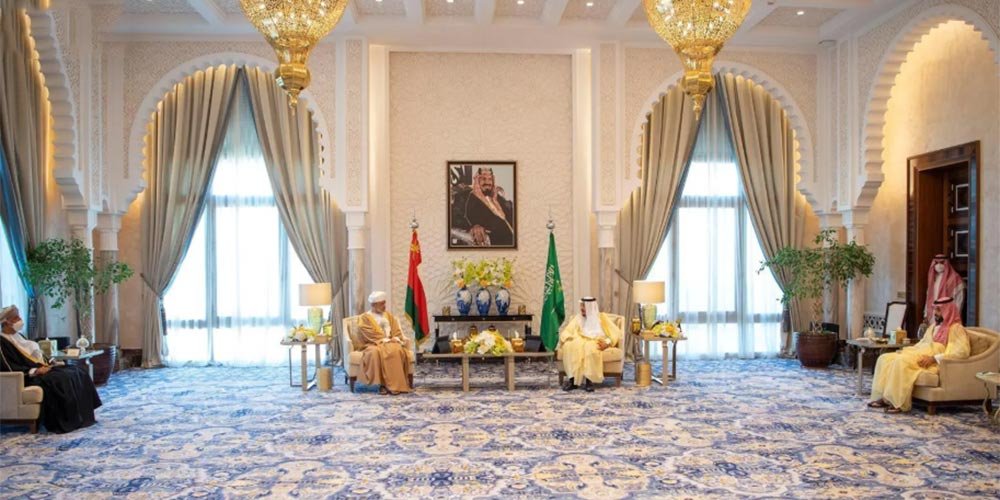
Saudi Arabia, government and people, shares in Oman’s celebration, affirming the depth of the fraternal relations between the two countries, which are based on shared history and religious, cultural, and geographic ties. Relations between the two countries are a distinctive model of political closeness and developmental integration, consolidated through mutual visits and official contacts, up to the era of Custodian of the Two Holy Mosques King Salman bin Abdulaziz Al Saud and Sultan Haitham bin Tarik.
Oman is moving toward the future, with continuous improvement in national and international indicators and expanded public services, infrastructure, and major investment projects.
In foreign policy, Oman continues its approach based on dialogue, respect for state sovereignty, and non-interference in other states’ affairs, strengthening friendly relations and promoting regional and international security.
In development and the economy, Oman saw positive growth in 2025 under Oman Vision 2040, thanks to efforts to diversify the economy, boost non-oil revenues, and broaden its productive base. The Tenth Five-Year Development Plan (2021-2025) achieved positive results that strengthened confidence in comprehensive and balanced development.
Oman’s trade balance recorded a surplus of about OMR5.5 billion at the end of July 2026, compared with about OMR3.6 billion a year earlier. Merchandise exports reached about OMR15.9 billion, up 17.8%, while imports rose 5.2% to about OMR10.4 billion. Oil and gas exports reached about OMR10.4 billion, up 21.6%, and non-oil exports rose to about OMR4.3 billion.
Special economic zones, free zones, and industrial cities attract strong investor interest, offering incentives such as tax and customs exemptions, 100% foreign ownership, one-stop-shop services, and electronic services, including the ability to select land online.
In education, five Omani institutions appeared in the 2026 QS World University Rankings, and Sultan Qaboos University advanced 28 places to rank 334th globally. Oman also rose 10 places in the Global Innovation Index over four years, from 84th to 74th, and improved 23 places in innovation outputs.
In social development and protection, Oman continues to build an integrated social care system that provides social and economic support to families, the elderly, persons with disabilities, women, children, and civil society institutions. The Social Protection Law covers all stages of life, from childhood to old age, with programs for retirement, maternity, disability, direct cash support for low-income families, and savings.
In health, Oman provides comprehensive health care covering prevention, treatment, rehabilitation, and promotion, in line with Oman Vision 2040. It ranked 55th globally and sixth in the Middle East and North Africa in the Legatum Prosperity Index (health pillar), up six places from 2019.
Oman achieved notable advances in organ transplantation, including the first heart transplant for an Omani citizen in Oman and the resumption of corneal transplants. Several hospitals also received international accreditation, including Khoula Hospital and the Royal Hospital.
On the environment, Oman topped Arab countries with the lowest pollution in the 2025 Global Pollution Index, ranking 22nd globally. Its wetlands reserve in Al Wusta Governorate was accredited under the Ramsar Convention, and it operates 56 air quality monitoring stations across its governorates.
In agriculture, fisheries, and water resources, Oman continues its integrated efforts to achieve Vision 2040 targets by developing the food and water security system and expanding investment in these three vital sectors.
In youth affairs, Oman supports young people through programs and initiatives that promote their participation and encourage creativity and innovation.
Oman’s National Day is an occasion to recall its comprehensive development accomplishments, based on an ambitious future vision and an approach that combines investment in people with continuous development opportunities.